More than peace of mind: How a simple app helped me sleep through the night again
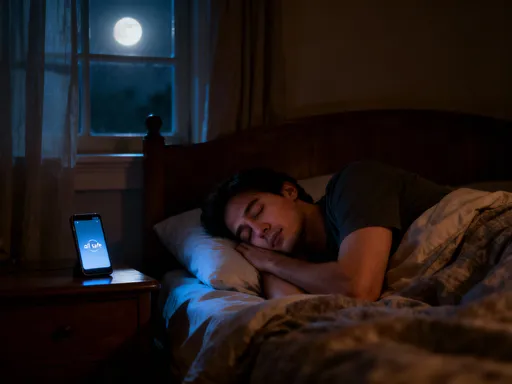
You know that quiet moment just before you fall asleep—when your mind suddenly remembers everything you hoped to forget? For weeks, I lay awake, worrying about gas leaks, stove burners left on, the “what-ifs” piling up. Then I found an app that didn’t just track my sleep—it watched over my home. It didn’t promise miracles, but slowly, night after night, I began to rest. Real rest. Not just for me, but for my whole family.
The Nighttime Worry That Never Sleeps
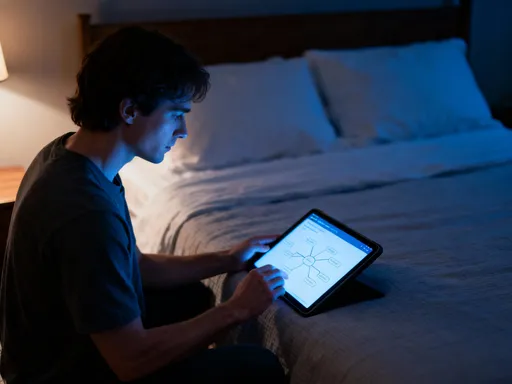
It starts quietly. You’ve tucked the kids in, double-checked the doors, turned off the living room lights. You slide under the covers, ready to let go of the day—only to feel your heart kick into overdrive. Did I turn off the stove? Did I lock the back door? What if the pilot light went out and gas is quietly filling the kitchen? These thoughts aren’t dramatic. They’re not born from fear-mongering news or horror stories. They come from love—from the deep, quiet responsibility of caring for a home and the people in it.
I used to lie there for hours, mentally walking through every room. Was the oven knob fully turned off? Could a small leak go unnoticed until it was too late? I’d even get up, tiptoe to the kitchen in the dark, just to make sure. And then, after confirming everything was fine, I’d go back to bed—only to start the loop all over again an hour later. It wasn’t insomnia in the clinical sense. It was anxiety dressed in the clothes of caution. And it wasn’t just me. I’ve talked to other moms—women in their 30s, 40s, 50s—who admit the same thing. We’re not paranoid. We’re protective. And that protection sometimes costs us the one thing we need most: rest.
Sleep isn’t just about physical recovery. It’s emotional reset. It’s the space where your brain lets go of the day’s stress and prepares for tomorrow’s challenges. When that space is invaded by worry, everything suffers. I was short-tempered in the mornings. I forgot small things—appointments, grocery items, my daughter’s recital time. I felt heavy, like I was carrying an invisible weight through the day. And the worst part? I didn’t even realize how much it was affecting me until I finally stopped feeling that weight.
When Sleep Apps Fall Short
Like a lot of people, I tried the usual fixes. I downloaded sleep trackers—apps that promised to analyze my breathing, monitor my movement, and tell me how much deep sleep I got. I wore a ring that measured my heart rate variability. I followed bedtime routines, drank chamomile tea, turned off screens an hour before bed. And while some of it helped, the core problem remained: I wasn’t afraid of not sleeping. I was afraid of what might happen while I was asleep.
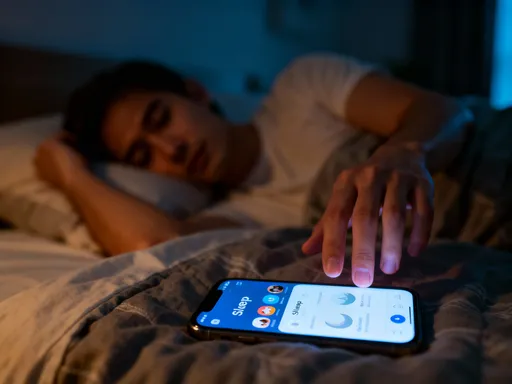
One night, after another restless hour, I looked at my sleep report. It said I’d only had 47 minutes of deep sleep. Great. But what did that tell me? That I was tossing and turning—yes, I already knew that. What I didn’t know was whether my home was safe. Was the gas off? Was the water heater functioning properly? Was the smoke detector still working? The app could tell me my sleep efficiency was 63%, but it couldn’t tell me if my family was safe. And in that moment, I realized: tracking sleep without addressing safety is like measuring your speed while driving blindfolded. The data doesn’t matter if the foundation isn’t secure.
That’s when I started wondering—why isn’t there a tool that focuses on the things that keep us awake, not just the sleep itself? Why are we so obsessed with counting hours and stages of sleep when the real enemy is often something outside our bodies? I didn’t need more data about my rest. I needed reassurance that I could rest. And that’s when I discovered a different kind of app—one that didn’t track sleep, but protected it.
A Different Kind of Sleep Solution
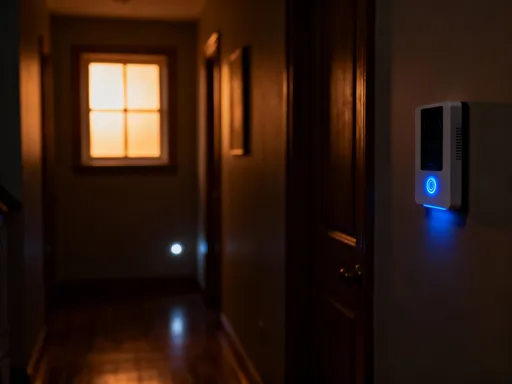
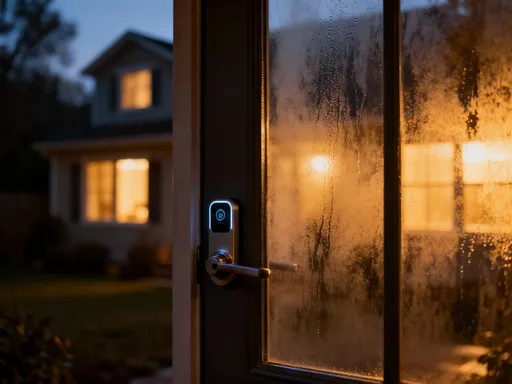
This wasn’t another sleep monitor. It wasn’t a white noise machine or a meditation guide. It was a smart home safety app—simple in design, powerful in purpose. At its core, it connected to a small gas sensor installed near my stove. That’s it. No complicated hub, no rewiring, no subscription I couldn’t afford. Just a little device, about the size of a smoke detector, that silently checked the air quality while I slept.
Here’s what changed: instead of me being the one constantly checking, the app became the watcher. It didn’t demand attention. It didn’t buzz with notifications for no reason. It just… worked. And that quiet reliability was exactly what I needed. I didn’t want something flashy. I wanted something trustworthy—something that didn’t add to my mental load but took a little of it away.
The first night I used it, I still woke up once, heart racing. Old habits don’t die quickly. But then I opened the app. There it was: a green checkmark. “Gas levels normal. Home secure.” No alerts. No warnings. Just peace. And something shifted. It wasn’t magic. It was data—calm, quiet, factual data—that said, “You’re safe.” That night, I fell back asleep faster than I had in months.
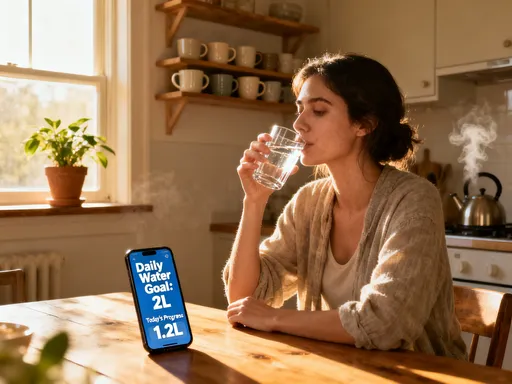
What I love most is that it doesn’t try to do everything. It doesn’t track my steps or remind me to drink water. It has one job: to make sure the air in my kitchen isn’t dangerous. And it does that job well. In a world full of apps that demand more of our attention, this one gives some back. It’s not a gadget. It’s a guardian.
How It Works—Without Taking Over Your Life
I’ll be honest—I was nervous about setup. I’m not a tech expert. I don’t enjoy reading manuals or troubleshooting devices. The last thing I wanted was to spend an evening trying to pair a sensor, only to give up and leave it in the box. But this was surprisingly simple. The sensor came with clear instructions—no technical jargon, just plain English. I placed it on the wall near the stove, plugged it in, and downloaded the app.
Pairing took less than five minutes. The app walked me through it step by step, with pictures and voice prompts. I didn’t need to know what “Wi-Fi 6” or “Zigbee” meant. I didn’t have to connect it to a smart home hub. It linked directly to my phone over the same network I use for email and streaming. Once it was set, I barely had to think about it again.
At night, while I sleep, the sensor checks the air every few minutes. If everything’s normal, the app logs a “safe” status. If it detects even a small rise in gas levels—say, from a pilot light that flickered out—it sends a notification. But here’s the thoughtful part: it doesn’t scream. No blaring alarm that wakes the whole house unless necessary. Instead, it sends a gentle alert to my phone—if I’m awake. If I’m asleep, it waits. And if the levels rise further, then it triggers a louder alert, just in case.
This balance is everything. It’s not about scaring me. It’s about protecting me—without turning my bedroom into a control room. I don’t have to check it. I don’t have to open the app every morning. But when I do, I see a simple dashboard: green for safe, yellow for caution, red for action. It’s clear. It’s calm. It’s exactly what I needed.
Tracking Progress Beyond Sleep Data
After a few weeks, I started noticing something unexpected. The app didn’t just show me gas levels—it showed me progress. A weekly summary highlighted how many nights were “fully safe,” how many minor alerts were resolved quickly, and—most importantly—how many times I didn’t wake up anxious. There was a chart, simple and clean, showing a steady decline in nighttime wake-ups.
At first, I thought, “That’s nice, but so what?” Then I realized: this wasn’t just data about my home. It was data about my mind. Every green night was a victory. Every uninterrupted sleep was proof that I was learning to trust again. I began to look forward to checking the weekly report. It wasn’t about perfection. It was about momentum—about seeing that, slowly, I was getting better.
One week, the app showed I’d had seven consecutive safe nights. No alerts. No wake-ups. I actually smiled. It felt like a milestone—like I’d crossed a line from constant worry to quiet confidence. And that confidence started to spill into other areas. I stopped double-checking the stove during the day. I didn’t feel the need to walk through the house before bed. I trusted the system. And in that trust, I found freedom.
What surprised me most was how emotional it felt. I wasn’t just sleeping better. I was feeling better. The app didn’t fix my anxiety overnight. But it gave me evidence—real, tangible proof—that my fears weren’t matching reality. And over time, that evidence rewired my brain. I wasn’t fighting my thoughts anymore. I was letting them go.
The Ripple Effect on Daily Life
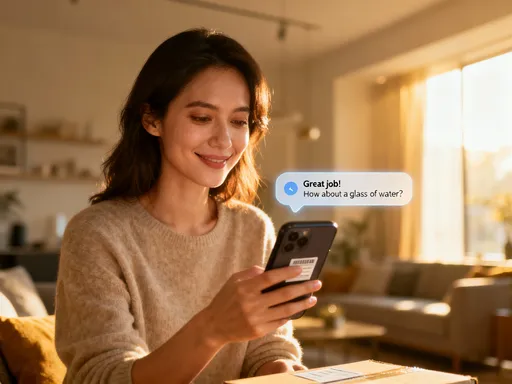
Better sleep changes everything. I didn’t realize how tired I was until I wasn’t. I woke up feeling lighter, clearer, more present. I had patience in the mornings—real patience, not just the kind I faked while sipping coffee. I listened more. I laughed more. I didn’t snap at my kids over spilled cereal or forgotten backpacks.
My daughter noticed. “Mom, you’re not yelling as much,” she said one morning, halfway through her toast. My husband said, “You seem… calmer. Like you’re really here.” And he was right. I was. For so long, part of me had been stuck in the kitchen at 2 a.m., imagining worst-case scenarios. Now, I was in the moment—watching my son tie his shoes, helping my daughter with homework, sharing quiet coffee with my partner.
And it wasn’t just emotional. My focus improved. I remembered things. I showed up to meetings on time, with energy. I started reading again—actual books, not just scrolling through my phone. I even had the mental space to plan a weekend trip, something I’d been putting off for months because I was too exhausted to think ahead.
This wasn’t just about safety. It was about reclaiming my life. The app didn’t do the parenting, the cooking, the working, or the loving. But it gave me the one thing that made all of it possible: rest. And from that rest came resilience, joy, and a deeper connection to the people I care about most.
Why This Isn’t Just Another App
I’ve downloaded plenty of apps that promised to change my life. Most of them collected dust on my phone. Some were too complicated. Others demanded too much attention. A few were just plain gimmicks. But this one? It earned its place on my home screen. Not because it’s flashy. Not because it has a million features. But because it works—quietly, reliably, night after night.
It didn’t dazzle me. It didn’t overwhelm me. It didn’t ask me to change my routine or learn a new system. It just showed up, did its job, and let me live. That’s rare. In a world full of noise, it chose silence. In a world that profits from our anxiety, it offered calm.
For anyone who lies awake wondering if the stove is off, if the house is safe, if they’ve done enough—this isn’t just a tool. It’s permission. Permission to rest. Permission to trust. Permission to finally, fully, let go.
And when you can do that—when you can close your eyes and know, really know, that you’re safe—that’s not just better sleep. That’s peace. And peace? That’s everything.