From Misunderstood to Connected: How Tech Helped Us Navigate Menopause Together
Menopause doesn’t just affect one person—it ripples through relationships, shifting moods, sleep, and even intimacy. Many couples find themselves confused, frustrated, or emotionally distant during this phase. But what if technology could help bridge the gap? This is not about cold gadgets or clinical data. It’s about real connection—how simple tools designed with empathy can turn tension into understanding, silence into conversation, and challenges into shared strength. I’ve seen it in my own life, and in the stories of so many women like us: when tech is used with heart, it doesn’t push us apart—it brings us closer.
The Quiet Struggle No One Talks About
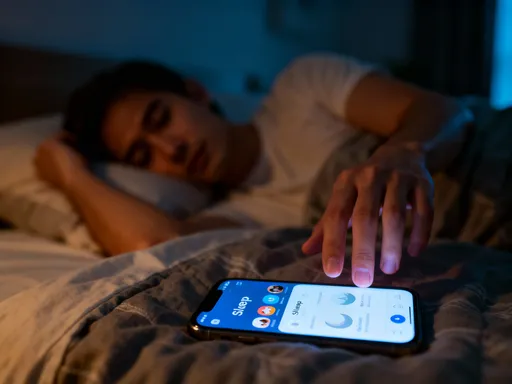
Let’s be honest—no one really prepares you for menopause. Not fully. Sure, we’ve heard about hot flashes and mood swings, but what no one tells you is how it seeps into everything: the way you feel in your own skin, the energy you bring to your home, and the quiet moments between you and your partner. One day, you’re managing your household, your job, your family, and the next, you’re lying awake at 3 a.m., heart racing, sheets damp, wondering why you snapped at your husband over something as small as a misplaced coffee mug.
And here’s the thing—he doesn’t always see it. Not really. He sees the outburst, the exhaustion, the canceled plans. But he doesn’t feel the hormonal rollercoaster that makes your body feel like a stranger’s. He doesn’t know that the reason you’re crying over a laundry pile is because your cortisol is spiking and your estrogen is crashing. And so, slowly, a distance grows. Not because you don’t love each other. Not because you don’t care. But because you’re both speaking different emotional languages, and neither of you knows how to translate.
I remember sitting at the kitchen table with my husband after a particularly rough week. I hadn’t slept in days. I was irritable, drained, and just wanted to be understood. Instead, he said, 'You’ve been short with me. Is it me?' My heart sank. Of course it wasn’t him. But how do you explain something you can’t even put into words yourself? That moment was a turning point. We realized we weren’t fighting each other—we were both fighting the same invisible storm, just from different sides.
Why Communication Breaks Down (And Where Tech Steps In)
Communication is hard at the best of times. When menopause enters the picture, it gets even harder. One partner is living the symptoms—hot flashes, brain fog, fatigue—while the other is trying to interpret them from the outside. Without context, it’s easy to misread. A tired 'I’m fine' becomes a wall. A quiet evening turns into emotional distance. And over time, those small misunderstandings pile up like unpaid bills, until one day, you’re both standing in the same room feeling completely alone.
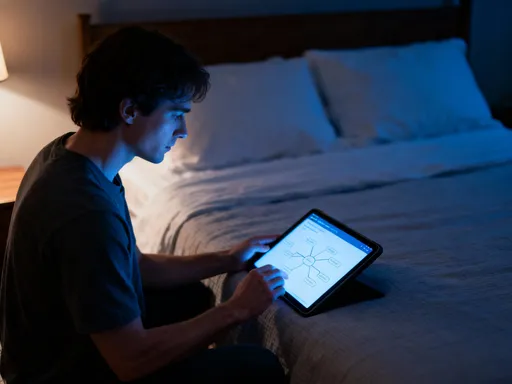
That’s where technology, when used thoughtfully, can step in—not to replace real talk, but to make it possible. Think of it like a translator. Apps that track mood, sleep, and energy levels don’t diagnose. They don’t judge. But they do something powerful: they create a shared picture. When your partner can see, in a simple graph, that you’ve had four sleepless nights in a row or that your stress levels spike every Wednesday afternoon, it changes the conversation. Instead of 'Why are you so tired all the time?' it becomes 'I see you’ve been struggling—how can I help?'
One couple I spoke with started using a shared wellness tracker. At first, the wife was skeptical. 'He’ll just think I’m exaggerating,' she said. But after a few weeks, her husband looked at the data and said, 'I had no idea it was this consistent. I thought it was just bad days.' That moment of validation—of being seen—was more healing than any argument could have been. The numbers weren’t cold facts. They were proof. And sometimes, proof is what we need to feel heard.
Tools That Speak the Language of Care
Not all technology feels warm. Some apps are full of charts, jargon, and notifications that add to the noise. But the ones that work in relationships aren’t flashy. They’re quiet. Thoughtful. Designed like a note left on your pillow: 'Thinking of you. Take it easy today.'
Imagine a shared journal app where, each morning, you tap a few icons—how you’re feeling, your energy level, your mood. Your partner gets a gentle, one-line update: 'Today might be tough—low energy.' No guilt. No long explanation. Just a quiet heads-up. That simple message changes the day. He knows not to plan a big outing. She feels supported, not interrogated. It’s not about dependency—it’s about dignity.
Or consider voice-note tools. Some days, you don’t have the energy to explain. But with one tap, you can send a 10-second voice message: 'I’m overwhelmed. Need a few minutes alone.' No drama. No conflict. Just honesty. And for the listening partner, it’s a gift. Instead of guessing or walking on eggshells, they know exactly how to respond. 'I’ll make tea. Take your time.'
These aren’t medical devices. They don’t cure anything. But they do something just as important: they reduce the emotional labor of being 'on' all the time. You don’t have to perform wellness. You don’t have to justify your feelings. You just get to be human—and loved anyway.
Building a Shared Rhythm, One Small Signal at a Time
The real magic of technology in menopause isn’t in big breakthroughs. It’s in the small, daily rhythms it helps create. Think of a shared calendar where you mark days you know will be hard—maybe around your cycle, or during high-stress times at work. Your partner sees it and adjusts. No questions asked. Just care in action.
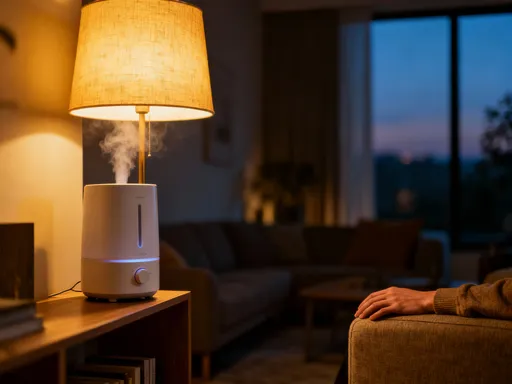
Or smart home tools that respond to your needs. A bedside lamp that dims automatically when your wearable detects rising stress. A gentle reminder on both your phones: 'Let’s take a walk—your heart rate’s been high all afternoon.' These aren’t commands. They’re invitations. Soft nudges that say, 'I see you. Let’s take a breath together.'
One woman told me about a simple app she and her husband use. Every evening, they each tap one word to describe their day—'tired,' 'okay,' 'frustrated,' 'grateful.' They don’t have to talk about it unless they want to. But that one word gives them a starting point. If she taps 'overwhelmed' and he taps 'ready to listen,' they know it’s time to connect. If both say 'tired,' they skip the deep talk and just watch a show together. No pressure. Just presence.
Over time, these small signals build something powerful: trust. You start to feel like you’re on the same team. Not because everything is perfect, but because you’re both paying attention. And that attention—consistent, kind, low-pressure—becomes the foundation of a deeper connection.
Learning to Listen Differently—With Help
We all want to be good partners. But sometimes, we don’t know how. We say things like 'Just relax' or 'You’ll feel better tomorrow' because we want to fix it. But in the moment, those words can feel dismissive. What we’re really saying is 'I don’t understand, so I’ll minimize it.'
Technology can help retrain that instinct. Some apps offer gentle prompts for the listening partner: 'Try asking: How can I help today?' or 'A quiet moment might mean more than words.' These aren’t scripts. They’re reminders to slow down, to pause before responding, to choose empathy over solutions.
One man shared how an app suggested he ask, 'Would you like space, or would you like me to stay?' That simple question changed everything. Before, he’d either hover or disappear, not knowing what she needed. Now, he waits for her answer. And she feels respected, not managed.
These tools don’t replace emotional intelligence. But they do act like training wheels—helping us develop new habits of care. Over time, the prompts become second nature. You start asking better questions without thinking. You learn to listen not to fix, but to understand. And that shift—small but profound—can transform a relationship.
When Simplicity Wins Over Complexity
The best tools for menopause aren’t the ones with the most features. They’re the ones you actually use. The ones that fit into real life—your busy mornings, your quiet evenings, your off days. You don’t need AI analysis or complex dashboards. You don’t need five different apps tracking every bodily function. What you need is something simple, private, and consistent.
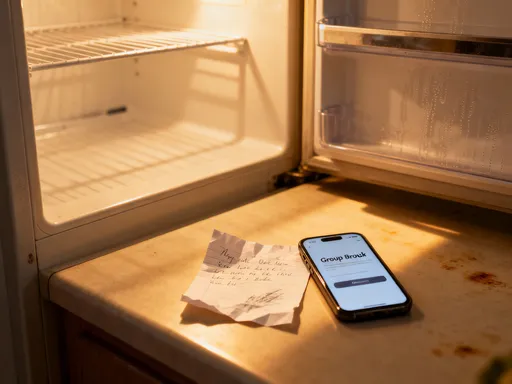
Think of it like a sticky note on the fridge: 'You’ve got this.' It’s not fancy. But it’s there. Every day. A small reminder of care. The best tech feels like that—unobtrusive, reliable, kind.
One couple uses a shared checklist app. Not for chores, but for emotional check-ins. Each week, they add one small thing they appreciate about each other. 'I loved how you made coffee this morning.' 'Thank you for not pushing me to talk last night.' These notes stay there, building over time. On hard days, they scroll back and remember: we’re still us. We still see each other.
Complexity fades. But simplicity lasts. The tools that survive in real life are the ones that ask little and give much. They don’t demand your attention. They just quietly support you—like a good friend who knows when to speak and when to sit in silence.
Rebuilding Connection, One Day at a Time
Menopause isn’t a crisis. It’s a transition. And like all transitions, it asks something of us. It asks us to slow down. To listen. To adapt. And when we do it together—with honesty, with patience, with a little help from technology—we don’t just get through it. We grow.
I’ve watched couples who once felt disconnected now move through this phase with a new kind of closeness. They don’t have fewer symptoms. But they have more understanding. They’ve learned to read each other’s signals—digital and human. They’ve built routines that honor fatigue, celebrate small wins, and protect quiet moments.
The goal isn’t to eliminate the challenges. It’s to face them together. To say, 'This is hard, but we’re here.' And over time, that 'here' becomes a place of strength. Not because the storm has passed, but because you’ve learned to dance in the rain.
Technology, at its best, doesn’t replace love. It makes space for it. It removes the noise, the guesswork, the misunderstandings, so that what’s left is clearer: care, connection, and the quiet courage of showing up, day after day.
If you’re in this phase, know this: you’re not alone. And you don’t have to do it alone. There are tools—simple, kind, human-centered tools—that can help you and your partner walk this path together. Not perfectly. But together. And sometimes, that’s the most powerful thing of all.