It's not just about alarms: How smart home systems quietly protect what matters most
You know that nagging worry when you leave the house—did I lock the door? Is the stove off? What if something happens while I’m away? I used to carry that anxiety daily. Then I started using smart home systems not for flashy gadgets, but for peace of mind. They don’t just automate lights or play music—they’ve become silent guardians of my family’s safety and my most important moments. This is how technology became my home’s quiet protector, and how it can do the same for you.
The Little Fears That Follow Us Home
Let’s be honest—most of us don’t live in a constant state of emergency, but we do live with a steady hum of low-level worry. It’s not dramatic, but it’s always there. Did I remember to close the garage door? Is the oven really off, or did I just think I turned it off? What if the kids come home late and the front door is locked? These thoughts don’t scream—they whisper. But over time, they wear you down.
I remember one rainy Tuesday, halfway through a school pickup line, when it hit me: I couldn’t remember if I’d locked the back door after letting the dog out. My heart rate jumped. I was ten minutes from home, stuck in traffic, and all I could think about was a stranger walking into my kitchen. It felt silly, but it wasn’t just about the door. It was about feeling like I couldn’t trust my own memory, like I was failing at the basic job of keeping my family safe.
And I know I’m not alone. So many of us carry these invisible loads. We double-check the stove, walk back to the car to make sure it’s locked, or wake up in the middle of the night wondering if we set the alarm. These aren’t just habits—they’re signs of how much we care. We want to protect what’s ours, not because we’re afraid, but because we love. The good news? Technology doesn’t have to be cold or complicated to help. In fact, the best kind of tech feels like it was made just for moments like these—small, real, and deeply human.
Beyond Convenience: What Smart Homes Actually Protect
When people hear “smart home,” they often think of voice commands, mood lighting, or robots that vacuum while you sip coffee. And yes, those things are nice. But what really changed my life wasn’t convenience—it was protection. Not the dramatic, movie-style kind, but the quiet, everyday kind that lets you breathe a little easier.
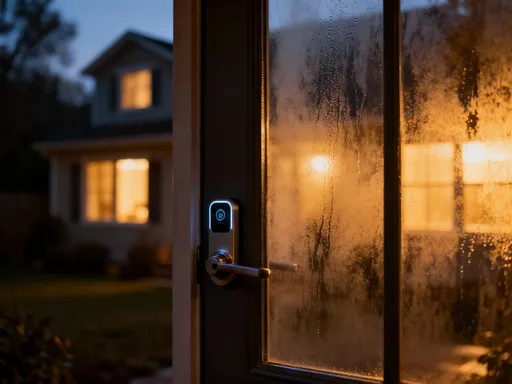
Think about it: every time you check a lock, you’re protecting your home. But every time you don’t have to check it? That’s when you protect something even more valuable—your peace of mind. A smart lock doesn’t just keep intruders out; it keeps anxiety out too. It tells you, without a doubt, that the door is secure. No second-guessing. No driving back. Just certainty.
And it’s not just about locks. Smart sensors on windows can alert you if a frame is forced open. Motion detectors can differentiate between your teenager sneaking in late and an unknown presence in the hallway. Smart thermostats can detect sudden temperature changes that might signal a broken pipe. Even smart plugs can cut power to an appliance you forgot to turn off—like that curling iron you left on all day.
But here’s what no one talks about enough: these systems protect your time. They protect your attention. They protect your ability to focus on your kids’ soccer game instead of wondering if the garage is closed. They give you back the mental space to be present. That’s not convenience. That’s freedom. And when you’re a mom, a partner, a caregiver—someone who’s always giving—freedom isn’t a luxury. It’s a necessity.
The First Step: Turning Awareness into Action
I didn’t start with a full smart home setup. I didn’t even know where to begin. The idea of cameras, sensors, apps, and hubs felt overwhelming—like I needed a degree in engineering just to feel safe in my own house. But then I realized something important: you don’t have to do everything at once. In fact, you shouldn’t.
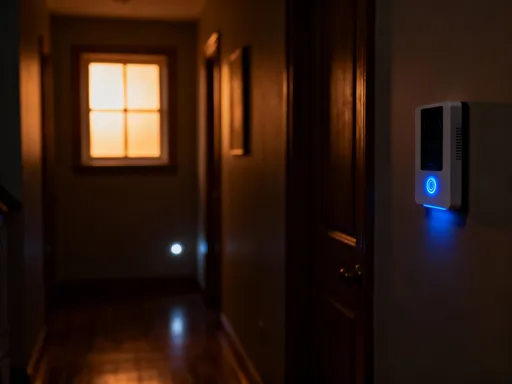
My first step was the simplest one: I bought a smart lock. Not a full security system. Not motion sensors or flood detectors. Just one lock for the front door. I chose one that connected to my phone, sent me alerts when the door was locked or unlocked, and let me give temporary access codes to people I trusted—like my sister when she dropped off groceries or the plumber when I wasn’t home.
The first time I got a notification that the door was locked—without me touching it—I felt a little thrill. Not because it was high-tech, but because it was reliable. I no longer had to wonder. I knew. And that tiny moment of certainty made me curious about what else could be that simple.
The key was starting small. I didn’t try to automate everything. I didn’t spend hours setting up routines. I just picked one pain point—forgetting to lock the door—and solved it. That small win gave me confidence. It showed me that smart home tech wasn’t about being a gadget lover; it was about being a problem solver. And if I could solve one problem, maybe I could solve another. Maybe I could actually make my home work for me, not against me.
Learning as We Live: How My Home Grew Smarter with Me
Here’s what no one tells you: your smart home doesn’t have to be perfect on day one. In fact, it’s supposed to grow with you. Mine definitely did. I made mistakes. I set up routines that didn’t work. I once accidentally locked myself out because I didn’t realize my phone’s location settings had changed. But each mistake taught me something. Each surprise made the system better.
One of my favorite “aha” moments came during a weekend when my parents visited. I had set the security system to arm automatically at 10 p.m., but that night, we were all up late talking. The system started counting down to arm, and I got an alert. Instead of ignoring it, I used the app to delay it—and then realized I could create a “guest mode” that adjusted the schedule when family was over.
That’s when it hit me: this wasn’t just about controlling devices. It was about teaching my home to understand my life. Over time, I added motion sensors in key areas. I linked them to my lighting so that a soft path of light would guide me to the kitchen at night—no more fumbling for switches or waking up the whole house. I set up a routine where the front door lock would automatically engage at bedtime, and the thermostat would lower to save energy.
What started as separate gadgets began to feel like a team—working together to protect, support, and simplify. And the more I used it, the more it adapted. It wasn’t me chasing the technology anymore. It was the technology keeping pace with me. That shift—from effort to ease—was everything.
Protecting More Than Possessions: Guarding Time, Peace, and Presence
If I had to sum up the biggest benefit of my smart home, it wouldn’t be the security cameras or the smart locks. It would be this: I have more mental space. I’m not constantly running through checklists in my head. I’m not distracted during work calls, wondering if the back gate is latched. I’m not lying in bed replaying my morning routine to see if I missed something.
This might sound small, but it’s huge. Every time you don’t have to make a decision, you save a little energy. Every time you’re freed from a worry, you gain a moment of clarity. Over time, those moments add up. I’ve noticed I’m more patient with my kids. I’m more focused when I’m working from home. I’m more present during family dinners because I’m not mentally miles away, checking imaginary locks.
There’s a term for this—decision fatigue. It’s real, and it’s exhausting. As women, especially as moms, we make hundreds of decisions a day. What to cook, who needs rides, which bills to pay, what to wear, how to comfort a child, how to manage schedules. The last thing we need is to waste mental energy on things that technology can handle for us.
Smart home systems don’t replace our judgment. They support it. They take over the small, repetitive tasks so we can focus on the big, meaningful ones. They don’t make us less responsible—they make us more capable. And when you feel capable, you feel calmer. When you feel calmer, you show up better—for your family, your work, yourself.
Making It Work for Real Life: Simple Setups That Actually Stick
I’ll be honest—some setups I tried didn’t last. I once created a “goodnight” routine that turned off every light, locked every door, lowered the thermostat, and armed the security system. It sounded perfect. But in real life, it was too rigid. If someone stayed up late reading, the lights would shut off anyway. If I got a phone call after bed, I’d have to reset everything.
So I simplified. Now, my routine only includes the essentials: the front door locks automatically, the thermostat adjusts, and the porch light turns off. The rest? I control manually, when needed. The system supports my life—it doesn’t dictate it.
Another lesson: keep it user-friendly. I chose devices with simple apps, clear notifications, and easy setup. I involved my family—my husband and kids learned how to disarm the system, check the door status, and use voice commands. When everyone understands how it works, it becomes part of daily life, not a chore.
I also organized everything around existing habits. Instead of creating new routines, I built the tech into the ones we already had. For example, when we leave for school and work, the “away” mode turns on automatically based on our phone locations. When we come home, the system recognizes our devices and disarms itself. It feels natural, not forced.
And I didn’t spend a fortune. I started with one device. Then added another when it made sense. I looked for sales, read reviews, and chose brands known for reliability. The goal wasn’t to have the fanciest system—it was to have one that worked, every day, without stress.
A Home That Learns, a Life That Breathes Easier
Looking back, the biggest change wasn’t in my home—it was in me. I used to carry a low-grade anxiety that I didn’t even realize was there until it started to fade. Now, when I leave the house, I don’t double-check the locks. I don’t call my neighbor to ask if the garage door looks closed. I just go.
That freedom has rippled into other parts of my life. I’m more confident. I’m less reactive. I trust myself more because I know I’ve built a system that supports me. It’s not about control. It’s about trust—between me and my home, between me and the technology, between me and my own choices.
Smart home systems aren’t magic. They don’t eliminate all risk or solve every problem. But they do something powerful: they reduce the noise. They quiet the worries that steal our focus and drain our energy. They create space—for calm, for connection, for living.
And maybe that’s the most important protection of all. Not just guarding our homes, but guarding our ability to enjoy them. To laugh without distraction. To hug our kids without thinking about the stove. To sleep deeply, knowing we’re safe.
Technology, at its best, shouldn’t feel like technology. It should feel like relief. Like a deep breath after holding it too long. Like coming home—not just to a house, but to a life that feels manageable, meaningful, and truly yours.