Cut My Evening Routine from 60 to 25 Minutes: How Smart Humidifiers Gave Me Back Me-Time
Remember those evenings when you’re exhausted, but still fumbling with humidifiers, checking rooms, adjusting settings—only to realize you’ve wasted precious downtime? I was there too. It hit me one night: technology should simplify life, not add tasks. That’s when I rethought how I used my smart humidification system. What I discovered didn’t just improve air quality—it reshaped my routine, my focus, and my peace of mind. And it can do the same for you.
The Hidden Time Drain in Your Daily Routine
Let’s be honest—how many of us actually look forward to the post-dinner chore list? You’ve fed the family, cleaned up, helped with homework, maybe folded a mountain of laundry. All you want is to sit down, breathe, and reclaim a little bit of your evening. But then you remember: the air feels dry, your throat’s scratchy, and someone’s already coughing. Time to deal with the humidifier.
I used to walk from room to room like a nighttime inspector. Is the kids’ unit on? Did it run out of water again? Should I move it closer to the bed? And why does the living room always feel like a desert? I’d fiddle with dials, refill tanks in the dark, and still end up second-guessing whether the humidity was just right. Some nights, I’d forget entirely—only to wake up with a stuffy nose and regret.
What I didn’t realize then was that these tiny actions—each taking just two or three minutes—were stacking up. Checking, refilling, adjusting, relocating. Over time, it added up to nearly an hour of my evening, every single day. And it wasn’t just the minutes lost. It was the mental load. The nagging thought in the back of my mind: Did I remember to turn it on? That kind of low-grade stress doesn’t just steal time—it steals peace.
Then one night, after rushing to refill a unit during my daughter’s bedtime story, I paused. She looked up and said, ‘Mommy, why do you always have to go fix the air?’ That question hit me hard. Why was I always fixing the air? Shouldn’t my home be working for me, not the other way around?
The Misconception: More Control Means Better Results
Like a lot of us, I thought being hands-on meant I was doing a better job. If I adjusted the settings based on how the air felt, if I moved the humidifier to where it was needed most, I was being responsible, right? I believed that constant attention equaled better comfort and healthier air. But the truth is, the opposite is often true.
Think of it like baking bread. You wouldn’t keep opening the oven every five minutes to check if it’s rising, would you? Every time you do, you let out heat and moisture, disrupting the process. The same thing happens when we micromanage our home environment. Every time we turn a humidifier on or off, adjust the mist level, or move it from one room to another, we’re interrupting a steady rhythm that the system could otherwise maintain on its own.
Our homes don’t need constant tweaking—they need consistency. And here’s the real kicker: our instincts about humidity are often wrong. We might feel dry air in one moment, crank up the humidifier, then overcompensate and end up with too much moisture. That kind of fluctuation doesn’t just waste energy—it can actually create discomfort or even encourage mold growth over time.
The breakthrough for me came when I realized that less control could actually mean better results. Instead of trying to manage every little detail, what if I let a system designed for consistency do the job? What if I trusted it to maintain the right balance—without me hovering over it like a nervous parent?
That shift in mindset—from operator to overseer—was the first real step toward getting my evenings back. I wasn’t giving up control. I was upgrading it.
How Smart Humidification Actually Works—Without You
Now, I know what you might be thinking: ‘Smart tech sounds complicated. What if I can’t figure it out?’ I felt the same way at first. I pictured apps with confusing menus, settings buried in layers, and error messages in code. But the truth is, today’s smart humidifiers are designed for people like us—busy, thoughtful, home-focused—who want things to just work.
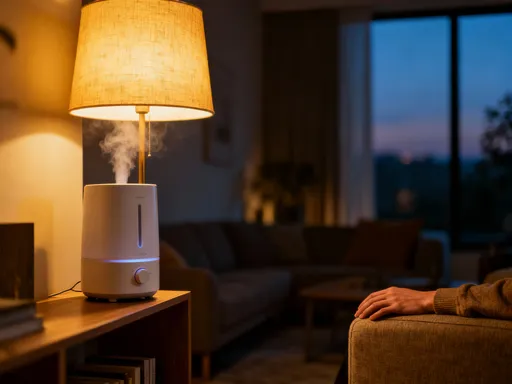
Here’s the simple version: a smart humidifier uses sensors to measure the moisture in the air. When it detects that humidity is too low—say, below 40%—it turns on automatically. When the air reaches the ideal level, it adjusts or shuts off. No guessing, no manual checks. And because it’s connected to your home Wi-Fi, you can control it from your phone, tablet, or even voice commands through devices like Alexa or Google Assistant.
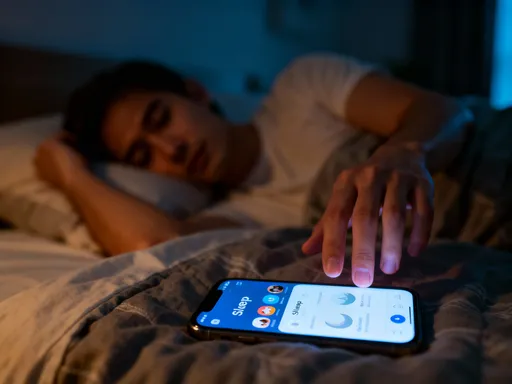
But the real magic happens when you set it to run on its own. For example, I created a ‘Sleep Mode’ schedule that starts at 7:30 p.m., when the house cools down and the air tends to dry out. It runs at a gentle, quiet setting and automatically shuts off at 8 a.m. No need for me to remember a thing. I also set up geofencing—so if I’m running late from the grocery store, the humidifier knows when I’m about 15 minutes from home and starts warming up the air. By the time I walk in, the house feels comfortable, not stuffy or dry.
And here’s something I didn’t expect: it actually learns your patterns. Over time, it notices when you tend to adjust settings and begins to anticipate your preferences. It’s not mind-reading—it’s thoughtful design. It’s like having a quiet helper who remembers what you like and does it before you even ask.
The best part? Once it’s set up, you don’t have to think about it. No more midnight trips to refill a tank. No more waking up to a unit that turned off at 10 p.m. It just… works. And that freedom? That’s where the real time savings begin.
One Small Change That Saved Me 35 Minutes Every Night
So, how did I go from 60 minutes of evening chores to just 25? It wasn’t about doing more. It was about doing one thing differently.
The big shift happened when I stopped treating each humidifier as a separate task and started thinking of my home as a single system. Instead of managing three units in three different rooms with three different schedules, I centralized everything. I picked a main unit for the central hallway—strategically placed to circulate moisture to the bedrooms—and used my phone app to sync settings across the house.
Here’s exactly what I did: I opened the app, named my evening routine ‘Calm Down,’ set it to start at 7:30 p.m., chose a low-noise mist level, and enabled auto-shutoff for 8 a.m. I also turned on filter alerts so I’d know when maintenance was due—no more guessing or forgetting. Then, I linked it to my bedtime reminder in my calendar. Now, when my phone pings at 7:25, I know the humidifier will take care of the rest.
That 10-minute setup replaced a nightly ritual of checking, refilling, adjusting, and relocating. No more guessing if the kids’ room was humid enough. No more walking around with a water jug at 9 p.m. No more waking up to silence because a unit had shut off early.
The numbers are real: I used to spend about 35 extra minutes each evening on humidifier-related tasks. Now? I spend less than five. That’s 35 minutes a night, 245 minutes a week, over 1,000 minutes a month. In one year, that adds up to more than 200 hours—nearly nine full days—of time I’ve reclaimed.
And it’s not just about the clock. It’s about the mental space. I’m no longer carrying that little worry in the back of my mind. I don’t have to pause a conversation, stop reading, or get up from the couch to ‘fix’ the air. My home handles it. And that makes all the difference.
What I Do With the Time I’ve Gained
You know, when I first thought about saving 35 minutes a night, I imagined scrolling through social media or catching up on TV. But what’s actually happened is so much better.
Those extra minutes have become sacred. I use them to sit with my daughter and read an extra chapter of her favorite book. We talk about the characters, make up silly voices, and sometimes she falls asleep halfway through—peacefully, without coughing. I’ve started journaling again, something I hadn’t done in years. Just five or ten minutes of writing down what went well, what I’m grateful for, what I need to let go of. It’s become my quiet anchor at the end of the day.
Sometimes, I just sit. No phone, no noise, no to-do list. I breathe deeply, feeling the difference in the air—moist, clean, comfortable. I notice how my skin feels softer, how my throat doesn’t itch, how my sleep has improved. And I think: this is what comfort really means. It’s not just about physical ease. It’s about emotional stillness. It’s about having the space to just be.
Before, these moments felt like luxuries I couldn’t afford. Now, they’re part of my routine. And that shift has changed more than my schedule—it’s changed how I show up as a mom, as a partner, as a person. I’m more present. Less rushed. More patient.
Technology didn’t give me more hours in the day. But it gave me back the ones I was losing to small, repetitive tasks. And in doing so, it helped me reconnect with what matters most—my family, my well-being, my sense of self.
Avoiding the Common Mistakes That Keep You Busy
Now, I’ll be honest—I didn’t get this right the first time. Like anyone learning something new, I made a few mistakes along the way. And if I can save you even 10 minutes of frustration, it’ll be worth sharing.
My first big error? Placing the humidifier in a corner of the bedroom with the door closed. I thought keeping it near the bed would help, but because the room wasn’t circulating air well, the unit would shut off early, thinking the humidity was high—when really, it was just trapped in one spot. Once I moved it to a more central location with better airflow, everything improved.
Another mistake? Ignoring the filter alerts. I thought, ‘It’s still working fine,’ but over time, the mist became weaker, and the unit had to run longer to achieve the same effect. That meant more noise, more water use, and more wear on the machine. When I finally changed the filter, I was shocked at how much better it performed. Lesson learned: those alerts are there for a reason.
And here’s one I see a lot: people overcomplicate the app. They create five different schedules, link them to voice commands, set up automations with other devices—and then they forget how it all works. Simplicity is key. Start with one routine—like ‘Evening Calm’ or ‘Sleep Mode’—and stick with it. You can always add more later.
Also, don’t feel like you need the most expensive model. Many mid-range smart humidifiers offer the core features you actually use: auto-humidistat, app control, scheduling, and quiet operation. Focus on what matters for your home, not the flashy extras.
The goal isn’t to become a tech expert. It’s to make your life easier. So keep it simple, learn from small hiccups, and remember: even the smartest system works best when you use it wisely.
Reclaiming Your Evenings: A Smarter Life Starts Here
Looking back, I realize that changing how I used my humidifier wasn’t just about saving time. It was about rethinking what home comfort really means.
For years, I thought it was my job to manage every detail—to be the one who remembered, who adjusted, who fixed. But real comfort isn’t about control. It’s about trust. Trusting that your home can support you, that technology can serve you, and that you deserve moments of peace without having to earn them.
That 35 minutes I saved every night didn’t just give me more time. It gave me more presence. More breath. More connection. I’m not just sleeping better—I’m living better.
And the beautiful thing is, this isn’t about having a perfect home or the latest gadgets. It’s about making one small, thoughtful change that ripples through your entire day. It’s about choosing tools that align with your values—family, health, calm—and letting them carry some of the load.
So if you’re still checking humidifiers room by room, refilling tanks in the dark, or sacrificing your downtime for tasks that could run themselves—know this: it doesn’t have to be that way. You don’t have to choose between comfort and convenience. You can have both.
Start small. Set one schedule. Let the system run. Breathe in the difference. And then, use that reclaimed time to do something that fills your heart, not just your checklist.
Because at the end of the day, the best technology isn’t the one that dazzles you with features. It’s the one that quietly fades into the background—so you can step forward, rested, renewed, and fully present in your own life.