How I Funded My Art Training Without Draining My Savings
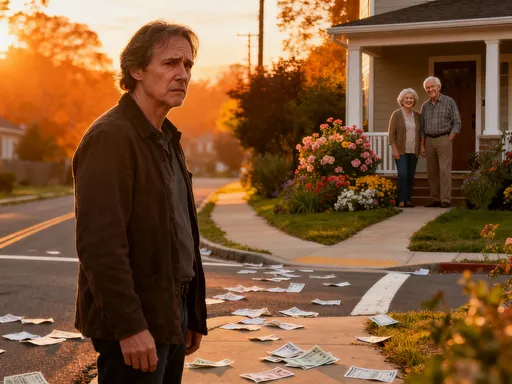
Paying for art training felt impossible at first—tuition, supplies, time. I didn’t have family money or a trust fund. But I discovered financial tools that actually work when you’re serious about creativity. This isn’t about get-rich-quick schemes. It’s real: budgeting, smart saving, income streams, and risk control. I tested strategies, made mistakes, and found what sticks. Let me show you how to fund your passion without financial burnout. What you’ll find here isn’t a fantasy of overnight success or inherited wealth, but a grounded path built on practical decisions, consistent effort, and financial awareness. Whether you're considering formal education or self-directed learning, the challenge remains the same: how to invest in your creative growth without sacrificing long-term stability. This is how I did it—and how you can too.
The Real Cost of Art Training Nobody Talks About
When most people think about the cost of art training, they focus on tuition alone. But the full financial picture is far more complex. Beyond the price tag of classes or degree programs lie a cascade of additional expenses that quietly accumulate. Quality sketchbooks, professional-grade paints, specialized brushes, digital tablets, software subscriptions like Adobe Creative Cloud, portfolio printing, exhibition fees, and even the cost of reliable internet for online critiques—all add up quickly. A single high-performance graphics tablet can exceed $800, while annual software licenses may run $300 or more. These are not one-time purchases; they are recurring investments required to stay competitive and technically capable in a rapidly evolving field.
Equally significant is the opportunity cost—the income forgone when reducing work hours or leaving a full-time job to attend school. For someone earning $40,000 annually, cutting hours by half to accommodate coursework means losing $20,000 in potential income over a year. This invisible burden is often overlooked in financial planning, yet it can be more destabilizing than direct costs. Many aspiring artists enter training assuming they can manage both work and study, only to face burnout and mounting stress as deadlines pile up. The emotional toll of financial pressure can stifle creativity, turning what should be an inspiring journey into a source of anxiety.
Traditional student loans are frequently presented as the default solution, but they come with serious drawbacks for creative learners. Unlike engineering or medicine, where degrees often lead to predictable salaries, art careers typically follow nonlinear paths with variable earnings. Repaying fixed monthly loan payments becomes difficult when income fluctuates month to month. Moreover, many art programs do not guarantee job placement or high earning potential, making debt a risky proposition. I know artists who graduated with $30,000 in loans only to earn under $25,000 in their first year post-graduation—a math equation that leads to prolonged financial strain.
Another hidden trap is emotional spending. The desire to appear professional or keep up with peers can lead to premature investments in expensive tools or advanced courses before foundational skills are solid. Buying a premium camera before mastering composition, or enrolling in a costly masterclass without completing basic training, drains resources without delivering proportional returns. These decisions often stem from insecurity rather than strategy. Recognizing this pattern was a turning point in my own journey. Instead of chasing the image of what an artist should have, I focused on what I actually needed at each stage—affordable materials, free tutorials, and incremental upgrades based on progress, not perception.
Why Standard Budgeting Falls Short for Creative Careers
Most budgeting templates assume a steady paycheck arriving every two weeks, predictable expenses, and a clear path to promotion. These models work well for salaried professionals but fail to reflect the reality of creative work. Artists often earn through commissions, freelance gigs, grants, or sales—revenue streams that are irregular, seasonal, or project-based. One month you might earn $5,000 from a mural contract; the next, you may make nothing. Traditional budgets collapse under this variability because they rely on fixed allocations that don’t adjust to changing inflows.
Consider a typical 50/30/20 budget: 50% for needs, 30% for wants, 20% for savings. For someone earning $3,000 a month, that means setting aside $600 for savings. But if your income drops to $1,200 the following month, maintaining that structure becomes impossible without dipping into reserves or accumulating debt. The rigidity of such models creates false expectations and leads to discouragement when life doesn’t conform to the spreadsheet. This mismatch between standard advice and real-world conditions leaves many creatives feeling like failures, when in fact the system itself is flawed.
What artists need is a flexible financial framework—one that prioritizes liquidity, adaptability, and resilience. Instead of allocating percentages based on income, a better approach starts with covering essential costs first: rent, utilities, basic supplies, and minimum debt payments. Then, any remaining income is directed toward savings, debt reduction, or reinvestment in skills—proportionally, not absolutely. This method, sometimes called zero-based or priority-based budgeting, ensures that critical obligations are met regardless of income fluctuations.
Liquidity is especially important. Keeping a portion of savings in easily accessible accounts allows artists to seize unexpected opportunities—like a last-minute residency or a collaborative project—without relying on credit. At the same time, maintaining an emergency fund equivalent to three to six months of essential expenses provides a buffer against dry spells. I built mine gradually, starting with $25 weekly transfers into a separate account. It took time, but having $4,000 available when a major client canceled a contract saved me from financial crisis. Flexibility also means adjusting goals seasonally. During high-earning months, I increased savings and paid down debt; during lean periods, I lived off savings without guilt, knowing I had planned for this ebb and flow.
Building a Financial Foundation Before Enrollment
Starting art training without financial preparation is like building a house on sand—it may stand for a while, but it won’t withstand pressure. One of the most impactful decisions I made was delaying enrollment by one year to strengthen my financial base. That extra time allowed me to pay off $7,000 in credit card debt, build a $6,000 emergency fund, and establish automated savings. While it was frustrating to wait, the peace of mind during school was worth every month of delay.
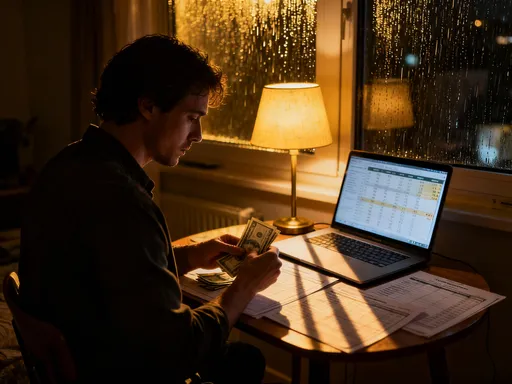
The first step in this process was debt reduction. High-interest debt, especially from credit cards, acts as a constant drain on future income. Every dollar spent on interest is a dollar not invested in education or tools. I used the avalanche method—focusing on the highest-interest debt first while making minimum payments on others—which saved me hundreds in interest over time. Simultaneously, I froze non-essential spending: no dining out, no new clothes, no impulse buys. This wasn’t about deprivation, but about redirecting resources toward a larger goal. I tracked every expense using a simple spreadsheet, which revealed how small daily purchases—coffee, snacks, subscriptions—were quietly eroding my savings potential.
Next, I created dedicated financial accounts: one for emergency savings, one for tuition, and one for supplies. Automating transfers ensured consistency. Every payday, 15% went to emergency savings, 10% to tuition, and 5% to supplies. These amounts were modest but sustainable. Over 12 months, this system generated over $5,000 for school-related costs. I also opened a high-yield savings account for these funds, earning 3.5% annual interest—far better than the 0.01% offered by traditional banks. That extra return, while not life-changing, helped offset inflation and added psychological momentum: seeing my money grow slightly each month reinforced my commitment.
To boost income, I leveraged my existing skills. Before formal training, I offered basic graphic design services on freelance platforms, created social media visuals for small businesses, and taught weekend drawing workshops at a local community center. These gigs paid $25–$50 per hour and allowed me to earn while refining my abilities. Importantly, they were aligned with my artistic goals, so the work felt meaningful rather than draining. This period of preparation wasn’t just about accumulating money—it was about building confidence, discipline, and a mindset of financial responsibility that carried me through school.
Smart Tools That Turn Savings into Momentum
Not all financial tools are created equal, and choosing the right ones can make a meaningful difference over time. For someone funding art training, the priority should be safety, accessibility, and modest growth—not high-risk investments. I focused on three proven options: high-yield savings accounts (HYSAs), short-term certificates of deposit (CDs), and micro-investment apps. Each served a specific purpose in my financial strategy.
High-yield savings accounts were my foundation. Unlike traditional savings accounts that offer negligible interest, HYSAs typically pay between 3% and 5% annually, with no risk to principal. I used one to store my emergency fund and tuition savings, ensuring the money was safe and liquid. Some banks offer tiered rates or bonuses for maintaining minimum balances, so I compared options carefully. The key was consistency: even small, regular deposits grew meaningfully over time. For example, saving $100 per month at 4% interest yields over $1,200 in a year, including interest—enough to cover software subscriptions or part of a course fee.
Short-term CDs were useful for funds I knew I’d need in 6 to 18 months. I placed a portion of my tuition savings in a 12-month CD with a fixed 4.25% return. The trade-off was limited access—early withdrawal penalties applied—but the higher yield made it worthwhile for money I didn’t need immediately. This tool helped me avoid the temptation to dip into savings for non-essential purchases, acting as a psychological barrier as much as a financial one.
Micro-investment apps, such as those offering fractional shares or automated investing, allowed me to grow wealth gradually with minimal effort. I linked one to my checking account and set it to invest $10 weekly in a diversified ETF. While the returns weren’t dramatic, the habit of investing—even in small amounts—built financial confidence. More importantly, it introduced me to market basics without requiring large capital. These tools didn’t make me rich, but they turned passive saving into active growth, reinforcing the idea that financial progress doesn’t require huge sums—just consistency and smart choices.
Earning While Learning: Sustainable Income Streams for Artists
The belief that you must wait until graduation to earn as an artist is a myth—one that keeps many creatives in financial limbo. In reality, income generation can and should begin during training. Every skill learned in class can be monetized immediately: illustration, typography, color theory, digital design, and even critique techniques can be packaged into services or products. The key is to shift mindset from student to practitioner early.
I started freelancing in my second semester, offering logo design and social media graphics to small businesses. Platforms like Upwork and Fiverr provided entry points, though I quickly learned to be selective. Low-paying gigs attracted difficult clients and drained energy, while higher-paying projects allowed me to build a strong portfolio and gain confidence. I set a minimum rate of $35 per hour and gradually increased it as my skills improved. Pricing fairly—not undercharging out of insecurity—was essential. Underpricing devalues your work and attracts clients who don’t respect your time. I used a simple formula: hourly rate = (desired annual income ÷ billable hours per year). For $40,000 annually with 1,000 billable hours, that meant $40/hour—a realistic benchmark that covered living costs and allowed savings.
Teaching was another valuable stream. I hosted monthly beginner drawing workshops at a local library for $75 per session. These weren’t advanced courses, but introductory classes on perspective, shading, and composition. Preparing them reinforced my own knowledge, and the income was steady. I also created and sold digital asset packs—brush sets, color palettes, and templates—on creative marketplaces. These required one-time effort but generated passive income over months. Licensing my illustrations for use in greeting cards and stationery added another layer, with royalty payments arriving quarterly.
Crucially, I avoided burnout by setting boundaries. I limited freelance work to 10 hours per week during school, protecting time for studies and rest. I used contracts for every project, specifying scope, deadlines, and payment terms, which prevented scope creep and late payments. These practices weren’t just about money—they built professionalism and long-term credibility. By graduation, I wasn’t starting from zero; I had an established client base, multiple income channels, and the confidence to sustain a creative career.
Risk Control: Protecting Your Future Without Killing Your Dreams
Every financial decision involves risk, and creative careers come with unique uncertainties. Market demand shifts, clients disappear, trends change. Without safeguards, these fluctuations can derail years of progress. Risk control isn’t about avoiding risk entirely—it’s about understanding it, measuring it, and building buffers so you can take smart chances without catastrophic consequences.
One of the biggest risks is over-leveraging—taking on too much debt in pursuit of education. While some debt may be unavoidable, relying solely on loans to fund training is dangerous, especially if income after graduation doesn’t meet expectations. I limited borrowing to essential costs only and used it as a last resort after exhausting savings, grants, and income options. I also avoided high-interest private loans, sticking to federal options with income-driven repayment plans as a safety net.
Another risk is dependency on a single income source. Many artists tie their livelihood to one platform, client, or style. If that disappears, so does their income. Diversification is the antidote. I built multiple revenue streams: freelance work, teaching, digital sales, and licensing. This way, if one dried up, others could sustain me. Diversification also applies to skills—learning both traditional drawing and digital illustration, for example, increases employability across industries.
Simple safeguards provided additional protection. I purchased liability insurance for my workshops, protecting against accidents or claims. I used written contracts for all client work, outlining deliverables, revisions, and payment schedules. These documents prevented misunderstandings and gave me legal recourse if needed. I also set personal risk thresholds—like never spending more than 20% of savings on a single tool or course—ensuring that one misstep wouldn’t cripple my finances. These practices didn’t eliminate risk, but they reduced its impact, allowing me to pursue my passion with greater confidence.
Putting It All Together: A Practical Roadmap to Funding Your Art
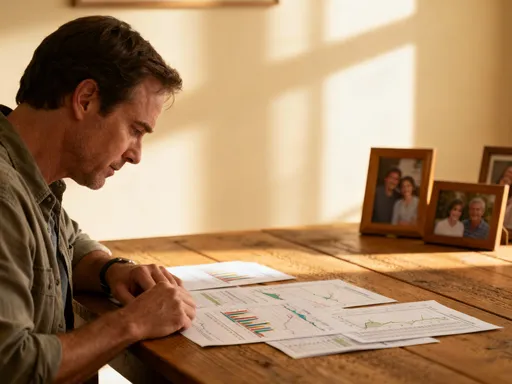
Funding art training isn’t about luck, privilege, or sudden windfalls. It’s about making disciplined, practical choices over time. My journey took three years from decision to graduation, but I emerged not only with skills and a portfolio, but with manageable debt and a functioning income system. Here’s how it came together: I spent one year preparing—paying down debt, building savings, and earning through side gigs. I enrolled part-time, keeping freelance work at a sustainable level. I used a flexible budget that adjusted to income changes, prioritized essential expenses, and protected my emergency fund. I leveraged smart tools—HYSAs, CDs, micro-investing—to grow savings with minimal risk. I diversified income early, avoiding reliance on any single source. And I implemented safeguards—contracts, insurance, spending limits—to control risk without stifling creativity.
The result was financial stability alongside creative growth. I didn’t become wealthy overnight, but I avoided the common pitfalls of debt overload, burnout, and financial despair. More importantly, I proved that funding your passion is possible with planning, patience, and persistence. You don’t need a trust fund or a corporate sponsor. You need a clear plan, realistic expectations, and the willingness to make consistent, thoughtful choices. Art training is an investment—not just in skills, but in yourself. And like any investment, it requires preparation, strategy, and care. By aligning financial discipline with creative ambition, you can build a sustainable path forward. Your dream doesn’t have to wait for money. With the right approach, you can fund it yourself—one smart decision at a time.